Naming and taxonomy
Name articles and sections the way customers actually search.
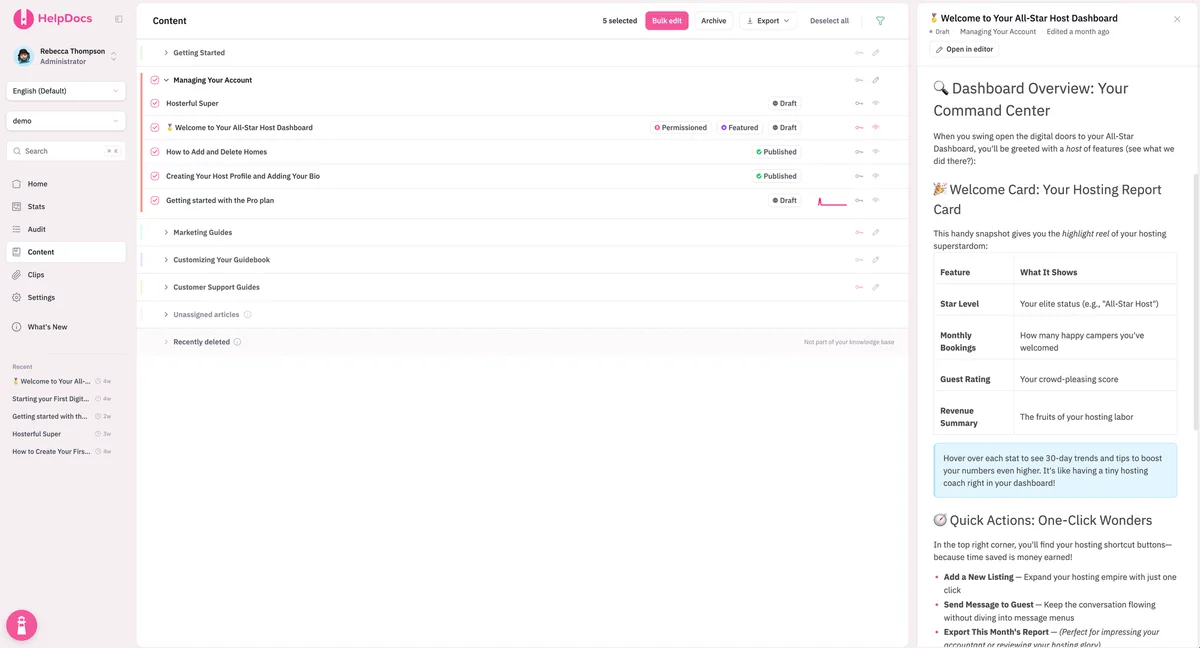
A customer wants to cancel their plan. They open your help center, type “cancel” into the search bar, and get nothing useful, because the article they need is filed under “Managing your subscription lifecycle.” The answer exists. They just can’t find it, so they open a ticket instead.
That gap, between the words people type and the words you used, is what knowledge base taxonomy is all about. Taxonomy is the naming and labeling layer that sits on top of how you structure a knowledge base: the article titles, section labels, and tags that decide whether a searcher lands on the right page or bounces. Good structure puts articles in sensible buckets. Good taxonomy makes sure the buckets and the articles are named in language your customers already use.
It matters more than it sounds. When self-service stalls, plenty of the failure isn’t missing content. It’s content nobody can find because it’s named wrong.
What is knowledge base taxonomy?
Knowledge base taxonomy is the system of names and categories you use to organize articles so people can find them. It covers three things: the titles on individual articles, the labels on your sections and categories, and the tags you use to link related content together. Think of it as the shared vocabulary between your team and your customers.
The golden rule comes straight from decades of usability research: write for the words your readers already know. Nielsen Norman Group’s guidance on writing for findability is blunt about it. If you fill your pages with clever, invented terms, people who search using their own everyday words simply won’t find you. Your customers define their problems in familiar language, so your taxonomy has to speak it back to them.
How to name knowledge base articles customers can find
Naming knowledge base articles well comes down to a few habits that compound across your whole library.
- Front-load the keyword. Lead with the word people search for. “Resetting your password” beats “How to handle authentication credential recovery.”
- Describe the task, not the feature. Customers search for what they want to do (“export my data”), not your internal feature name (“DataBridge Sync”).
- Kill the internal jargon. Product code names, team acronyms, and cute marketing labels are invisible to search. Save them for the body copy, if at all.
- Be specific and literal. Vague, clever titles look nice in a nav menu and disappear in a search bar.
Here’s the pattern in practice. Notice how the internal name and the searchable title rarely match.
| Vague or jargon title | What customers actually type | Searchable article title |
|---|---|---|
| Managing your subscription lifecycle | cancel | How to cancel your subscription |
| Authentication credential recovery | forgot password | Reset a forgotten password |
| DataBridge export workflows | export my data | Export your data to CSV |
| Onboarding excellence guide | getting started | Getting started: set up your account |
| Billing cadence configuration | change billing date | Change your billing date |
The right-hand column isn’t more exciting. That’s the point. Boring, literal titles are the ones that win searches.
Write section and category labels in plain language
The same rule applies one level up, to the categories that group your articles. Section labels should map to how customers think about their goals, not to your internal org chart. A section called “Account and billing” tells a customer exactly where to look. A section called “Revenue operations” tells them nothing.
Keep labels short, concrete, and parallel. If one section is “Getting started,” don’t make the next one “Advanced configuration and administrative controls.” Match the grammar and reading level so the whole menu scans in a second. Your navigation is a promise about where answers live, and consistent labels keep it.
Use tags with a consistent vocabulary
Tags connect related articles across categories, so a “billing” tag can surface a pricing article, a refund guide, and an invoice FAQ together. The trap is inconsistency. If one writer tags things “billing,” another uses “payments,” and a third writes “invoices,” your tags fracture into near-duplicates that help nobody.
Pick one word for each concept and write it down. This little controlled vocabulary (a fixed list of approved tags) is the difference between tags that group content and tags that just add noise. Fewer, well-chosen tags win.
Match real search terms and fix dead-end searches
Your best source of taxonomy ideas isn’t a brainstorm. It’s your search logs. The exact phrases customers type are a free, honest list of the words your titles should contain, and they’re often not the words you’d have guessed.
Pay special attention to your searches that return no results. Some are missing articles, but a surprising number are findability failures: the content exists, it’s just named in language nobody searches for. When you spot a hit (“cancel” returning nothing while your cancellation article sits under “subscription lifecycle”), you’ve found a rename waiting to happen. Adding common synonyms to titles and body copy catches the variations, so “delete account,” “close account,” and “cancel account” all lead somewhere.
The bottom line
A knowledge base taxonomy is really just empathy, written down as names. Title articles for the task customers are trying to finish, label sections in plain language, keep your tags consistent, and let real search terms tell you what to call things. Do that, and the answers you worked hard to write will actually reach the people looking for them, instead of sitting one mislabeled folder away.