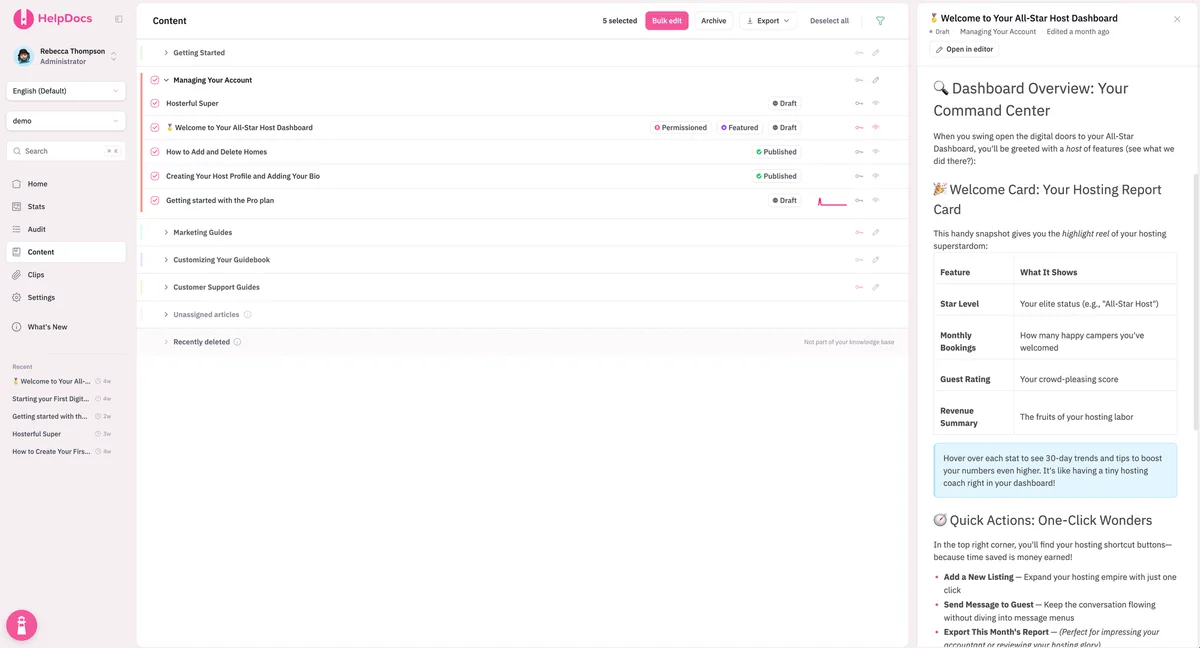
Put trusted answers wherever people ask.
Host your knowledge base, embed answers in your product, connect HelpDocs to AI tools, and share docs across the stack your team already uses.
 Shared “Customs delay process” in #supportSlack
 Answered from “Refund policy”ChatGPT
 Answered from “API authentication”Claude
 Resolved a chat from “Returns & exchanges”Fin
A knowledge base that feels native to your brand.
Publish docs on your own domain or subfolder, customize the experience, and give customers a knowledge base that feels connected to your product.
Your own domain
Publish on your domain or a docs subfolder so the help center lives right alongside your product.
Subfolder hosting
Serve docs from yoursite.com/help so search engines treat them as part of your main domain.
SSL by default
Every knowledge base is served over HTTPS automatically. No certificates to buy or renew.
On-brand design
Match your colors, logo, and fonts so the help center feels like a natural part of your product.
Fast, accessible templates
Hand-crafted templates built for SEO, accessibility, and speed, so pages load and rank well.
Custom CSS, JS, and HTML
Go as far as you like with full templating control when you want a completely bespoke build.
Light the way with in-app help.
Use Lighthouse to bring HelpDocs into the places customers get stuck, so they can search, read, and self-serve without ever leaving your app. Its API lets you drive it from your own UI, open a category, jump to an article, or launch the contact form on cue.
Explore Lighthouse Lighthouse Widget APILive on this page, try it
Go tab-less
Customers search, read, and self-serve right inside your app, with no tab-switching and no losing their place.
Style it, control it
Match it to your product, shape how it behaves, and deep-link straight to any article or category through the Widget API.
Live in minutes
Copy one snippet, paste it into your app, and you're done. Tweak the config whenever you like, no redeploys required.
Give AI something to talk about.
Connect AI agents and assistants to HelpDocs so answers come from approved, maintained documentation instead of scattered guesses.



Keep support aligned in Slack and beyond.
Search and share HelpDocs articles from the tools your team already works in, so everyone gives customers the same approved answer.
#shipmentsLena · Ops
Customer’s asking why LX-8841 is stuck in customs
Maya · Support
Ok let me find the article
/hd search customs clearanceCustoms delay process
cargoflow.helpdocs.io/article/customs-clearance-issues
Bring status and systems into the answer.
Show service status, connect analytics, and use APIs to make your knowledge base part of the wider customer support system.
Live status
Surface a status page so customers can see what's up before they ask.
All systems operational

Analytics
Pipe knowledge base activity into the analytics tools you already trust.



Most AI tools just want a URL.
Voice agents, chatbots, and support AI nearly all ask for an address to read. Your knowledge base publishes several, and picking the right one is the difference between a clean import and a crawler guessing its way around. Swap in your own subdomain, or your custom domain if you use one.
Public knowledge base URL
Rendered pages · every plan
https://your-slug.helpdocs.ioThe default for anything that crawls. Most agent builders and support AI ask for a website address, and this is it. Nothing to switch on, as long as your knowledge base is public.
sitemap.xml
XML list of every article · every plan
https://your-slug.helpdocs.io/sitemap.xmlBetter than the root URL wherever a tool accepts it, because it hands over the complete article list instead of asking a crawler to discover it. Some tools take nothing else. Created automatically.
How your sitemap worksrobots.txt
Plain text · every plan
https://your-slug.helpdocs.io/robots.txtWhere you let a named crawler through. This is the mechanism behind our HubSpot Service Hub and Atlassian Rovo integrations, rather than anything either side had to build.
llms.txt
Structured plain text · every plan
https://your-slug.helpdocs.io/llms.txtFor passive discovery by general AI assistants. Worth publishing, though it is a different job from the list above: the agent platforms here look for a URL to crawl, not for this.
Understanding llms.txtChatbot Source Page
JSON feed of published articles · needs HelpDocs AI
An API endpoint, authenticated with your API key or a JWT
For tools that ingest a feed rather than crawling pages. Do not hand this one to a page crawler: it returns JSON, not a readable page.
Using the Chatbot Source PageUsed by
HelpDocs MCP
Live tool calls · account auth
An MCP server endpoint, connected from your assistant
A live lookup instead of a static copy, so nothing goes stale between crawls. The right answer for tools that can call tools but cannot crawl a site.
See the MCP serverUsed by
AI Stats
Dashboard · in your account
In-app, under Stats
How you tell whether any of this actually worked. Shows which AI providers are pulling your content, rather than leaving you to assume the connection took.
Understanding AI Stats














Not sure which one a particular tool wants? Check its integration page, which lists the exact address to paste and where to paste it.
Works with the tools your team already uses.
From AI assistants to team chat, support suites, analytics, and developer tools, HelpDocs slots into your stack.
AI tools

Team chat
Support tools








Status & developer

Automation & API

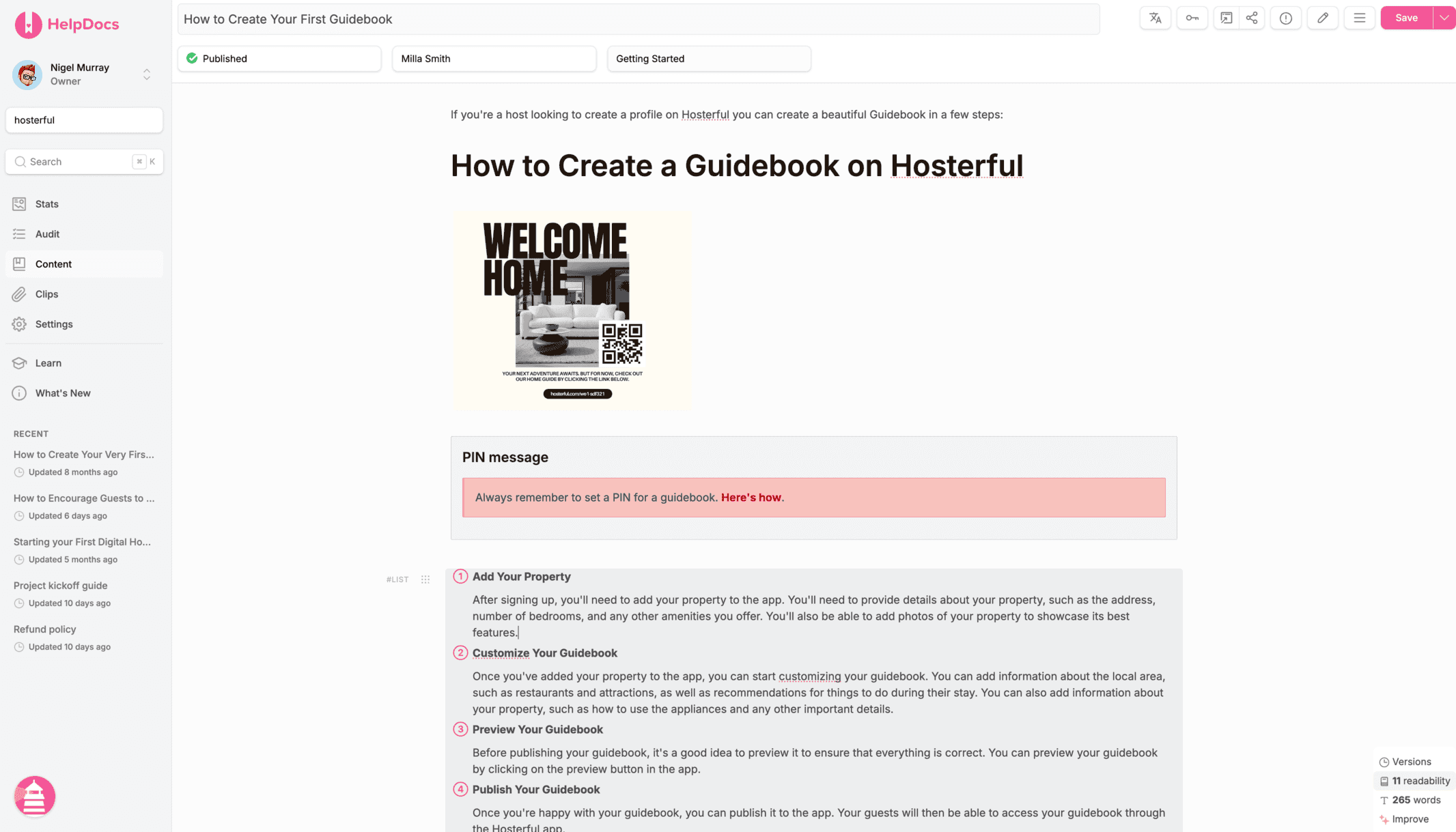
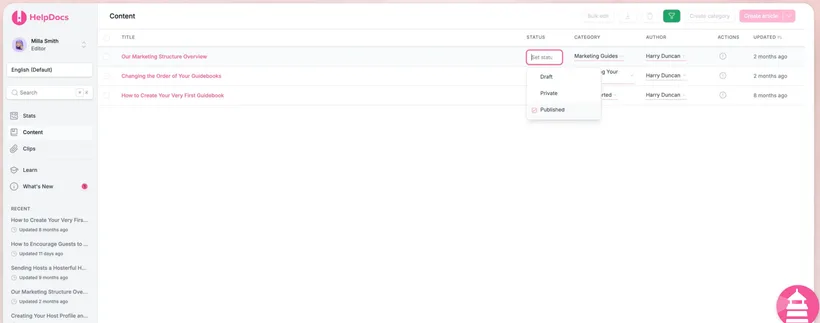
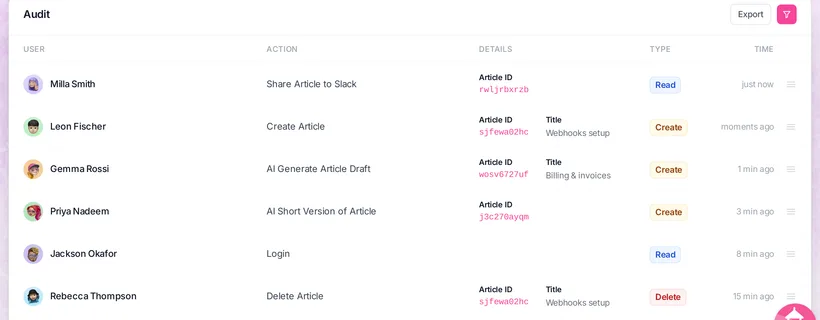
Start building your documentation infrastructure.
Create, organize, translate, and connect your docs without the admin sprawl of a support suite.
No credit card required.